
| By Godwin Ugbaka

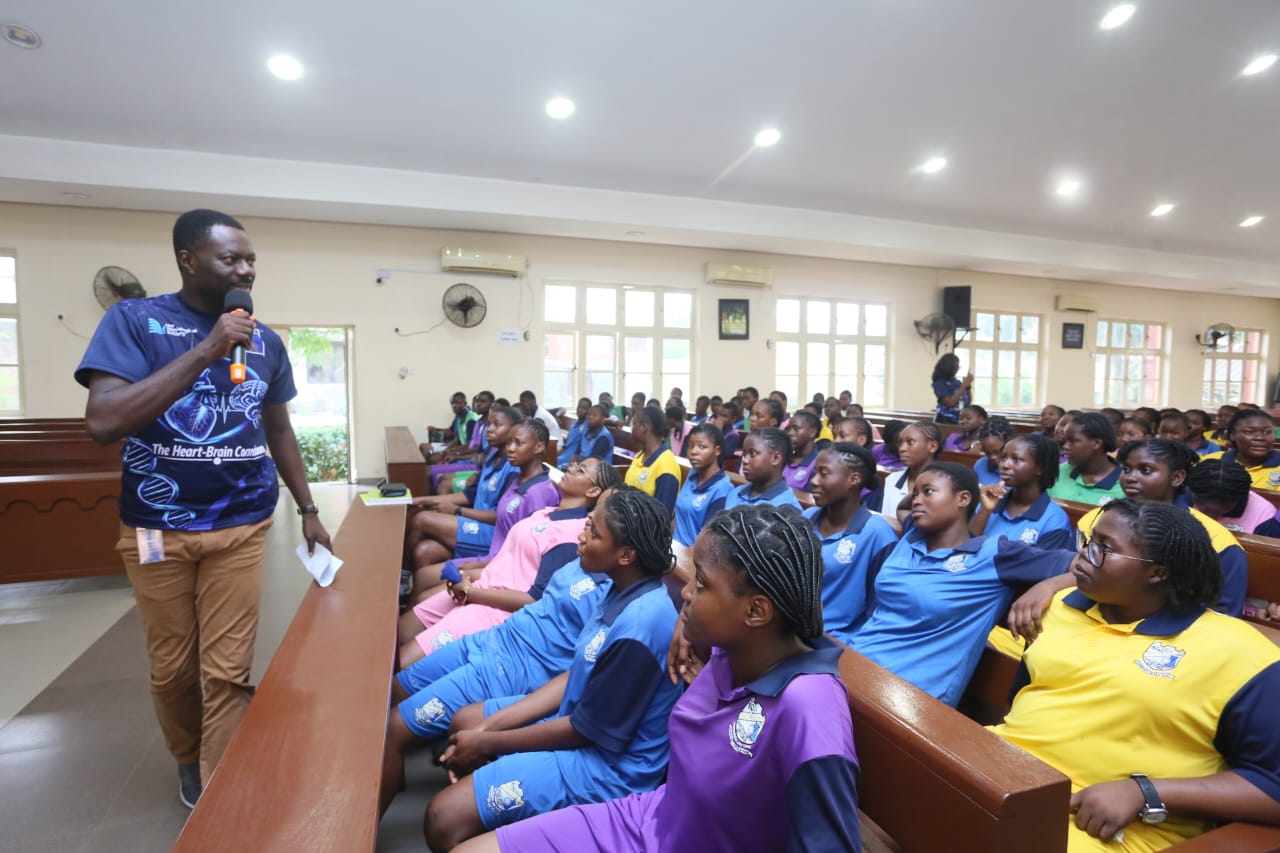
Dr. Patrick Abolarin (left) addresses SS2 and SS3 students on the theme of the 2026 Physiology Week celebration's outreach programme for Babcock University High School, Ilishan-Remo on Wednesday.

A cross section of some members of the Babcock University Physiology Students Association, staff and students of Babcock University High School at the outreach programme.
Babcock University’s Physiology Students Association, in collaboration with The Physiology Society, UK, has begun the 2026 Physiology Week celebration with a secondary school outreach at the Babcock University Activity Hall and a symposium at the Benjamin Carson College building.
The Physiology Week celebration, with the theme, “The Heart-Brain Connection: Physiology for Sustainable Health and Wellness,” would continue on Thursday with a health awareness outreach and fitness check at the Babcock University Cafeteria Arena.
Addressing SS2 and SS3 students of Babcock University High School on this year’s theme at the Fountain of Grace Chapel Hall on Wednesday, a lecturer in the department, Dr. Patrick Abolarin, explained that the heart, as a muscular organ, pumps blood throughout the body, supplying oxygen and nutrients to the organs, while the brain, as the control and coordination centre of the body, enables humans to think, learn, remember, move, feel emotions and make decisions.
According to him, the two organs constantly communicate with each other with the brain influencing the heart rate, while information from the heart and circulation reaches the brain. “For instance, when you are frightened, your brain activates the body’s stress response, your heart may beat faster, your breathing increases, and you may begin to sweat,” he said.
He explained that these changes prepare the body to respond to the situation, adding that “when you are relaxed, your body gradually returns to a calmer state.”
Dr. Abolarin advocated habits that promote a healthy heart and brain, to include eating a variety of foods, including fruits, vegetables, protein and energy-giving foods, and avoiding highly processed foods in the everyday diet; drinking adequate water, as water is essential for normal body functions; regular exercise; and adequate sleep, among others.
He said Physiology as a discipline offers fascinating career opportunities and physiologists could pursue careers in teaching and academia, biomedical research, neuroscience, sports and exercise science, pharmaceutical and biotechnology industries, and public health and health education.
He added that Physiology could also provide a foundation for further professional training and careers in medicine and other related health disciplines.