
| Communication, Media and Branding
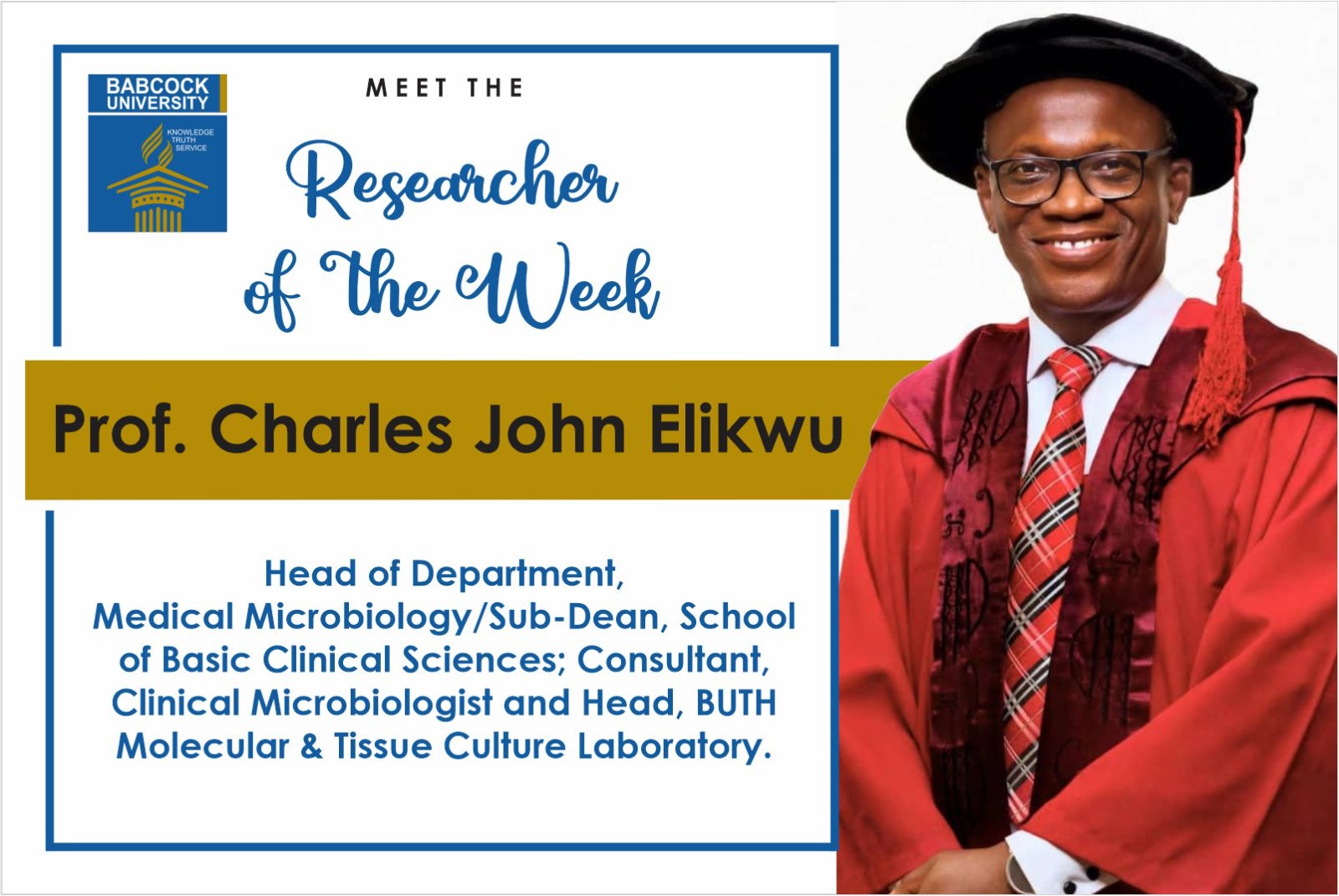
Antibiotics have transformed modern medicine. But what happens when the bacteria they are meant to kill no longer respond? This is the challenge driving Professor Elikwu’s research into antimicrobial resistance (AMR), a growing threat to patients, healthcare workers and health systems worldwide.
A clinical microbiologist, Professor Elikwu investigates bacterial resistance through surveillance, antimicrobial stewardship and infection prevention and control. His current work includes studies of bacterial bloodstream infections and their resistance patterns in collaboration with the Nigeria Centre for Disease Control and Prevention (NCDC) and the World Health Organization (WHO), as well as a TETFund-aided study of Mupirocin- and Methicillin-resistant Staphylococcus aureus among healthcare workers in Nigeria.
He is also exploring how genomics and artificial intelligence could strengthen AMR surveillance and stewardship.
His research speaks to a challenge that extends beyond the laboratory: preserving the effectiveness of antibiotics, preventing avoidable infections and equipping healthcare professionals with evidence to respond to emerging resistance.
In this edition of Babcock University Researcher Spotlight, Professor Elikwu discusses the motivation behind his work, the importance of local surveillance, the role of international collaboration and how his research contributes to Babcock University’s research capacity and training of future healthcare professionals and the Sustainable Development Goals (SDGs).
Inside the Research: A Conversation with Professor Elikwu
1. What are you currently researching?
My research focuses on antimicrobial resistance, including surveillance, antimicrobial stewardship, and infection prevention and control.
I am currently studying bacterial bloodstream infections and their resistance patterns in collaboration with and WHO. I am also working on a TETFund-aided project investigating Mupirocin- and Methicillin-resistant Staphylococcus aureus among healthcare workers in Nigeria. Beyond these studies, I am exploring how genomics and artificial intelligence can strengthen AMR surveillance.
2. What problem inspired you to pursue this research?
As a clinical microbiologist, I have seen how often infections stop responding to the antibiotics we depend on. Resistance is a growing threat to patients and health systems. Many infections that could have been prevented are instead treated with increasingly limited drug options.
That reality motivates my research into understanding resistance, strengthening surveillance and promoting practices that help preserve the effectiveness of available antibiotics.
3. What have you discovered so far?
Our surveillance work is showing the resistance trends emerging in bloodstream infections and among healthcare workers. These findings can help clinicians make better-informed treatment choices and guide hospital antimicrobial stewardship policies. They also reinforce my conviction that infection prevention and control is the first antibiotic. Preventing an infection in the first place can reduce the need for treatment and help limit opportunities for resistance to develop and spread.
4. Why does this research matter beyond the university?
Antimicrobial resistance does not respect borders. AMR anywhere is AMR everywhere. Local data from Nigeria contributes to national and global surveillance, helping hospitals, communities and policymakers understand and respond to resistance. Research conducted here can therefore inform decisions well beyond the institution where the work originates.
5. Who will benefit from your findings?
The beneficiaries include patients, healthcare workers, hospitals, public health agencies such as NCDC and WHO, and policymakers responsible for responding to antimicrobial resistance. The next generation of clinicians and researchers I train also stands to benefit from the knowledge, research experience and practical understanding developed through this work.
6. What has your research journey taught you?
Collaboration is essential. Lasting progress against antimicrobial resistance requires partnerships across laboratories, clinics, institutions and countries. I have also learned that prevention is always better than cure, and that mentoring others multiplies the impact of any single researcher’s work. Building the capacity of others is an important part of ensuring that progress continues beyond individual projects.
7. If your research succeeds, what could change?
I hope to see fewer preventable infections, more responsible antibiotic use, faster and more accurate diagnosis, and better patient outcomes. Stronger local surveillance would also give Nigerian hospitals the evidence they need to recognise emerging resistance and act early. Ultimately, the goal is to support decisions that protect patients while preserving the effectiveness of antibiotics for those who need them.
8. What are the next steps for your research?
I will continue the ongoing surveillance and healthcare-worker studies. I also plan to expand genomic and microbiome research and apply artificial intelligence and digital tools to antimicrobial resistance surveillance and stewardship. My appointment at Loma Linda University, running from July 2026 to June 2027, will provide further opportunities to deepen international collaboration.
9. In what ways has your research helped Babcock University?
My research strengthens the molecular and tissue culture laboratory at Babcock University Teaching Hospital (BUTH) and supports improvements in infection prevention and antimicrobial stewardship practices. It also raises Babcock University's research profile through national and international collaborations, while supporting postgraduate training and mentorship. I also epresent Babcock on the Ogun State Infection Prevention and Control (IPC) Technical Working Group
10. Where can readers find your publications?
Readers can explore my publications through PubMed and Google Scholar:
Professor Elikwu’s publications on PubMed
https://scholar.google.com/citations?user=TSnywTcAAAAJ&hl=en
11. How does your research contribute to the Sustainable Development Goals?
My research contributes to four United Nations Sustainable Development Goals:
- SDG 3 Good Health and Well-Being: Supporting efforts to reduce preventable infections and improve treatment outcomes.
- SDG 4 Quality Education: Training and mentoring future healthcare professionals and researchers.
- SDG 9 Industry, Innovation and Infrastructure: Strengthening molecular and genomic research capacity.
- SDG 17 Partnerships for the Goals: Collaborating with Nigerian and international teaching hospitals on antimicrobial stewardship.
These connections reflect the importance of combining research, education, innovation and partnerships to address a global health challenge.
Through his research, laboratory capacity-building and mentorship, Professor Elikwu is contributing to these efforts at Babcock University. His work reinforces an essential message: protecting the effectiveness of antibiotics begins not only with finding better ways to treat infections, but also with preventing infections and using existing medicines responsibly.
At Babcock University, research that matters connects scientific investigation with the health of people and communities.