
| Sandra Ikegwuruka
The fundamental rights of humanity; freedom of expression, the right to life, and the right to a fair trial are not merely legal privileges; they are the bedrock of a just society. When these rights are stripped away anywhere in the world, a dangerous contagion begins. Unchallenged violations embolden oppressors and erode the fabric of global justice. It is precisely to combat this tide of injustice that Amnesty International was established.
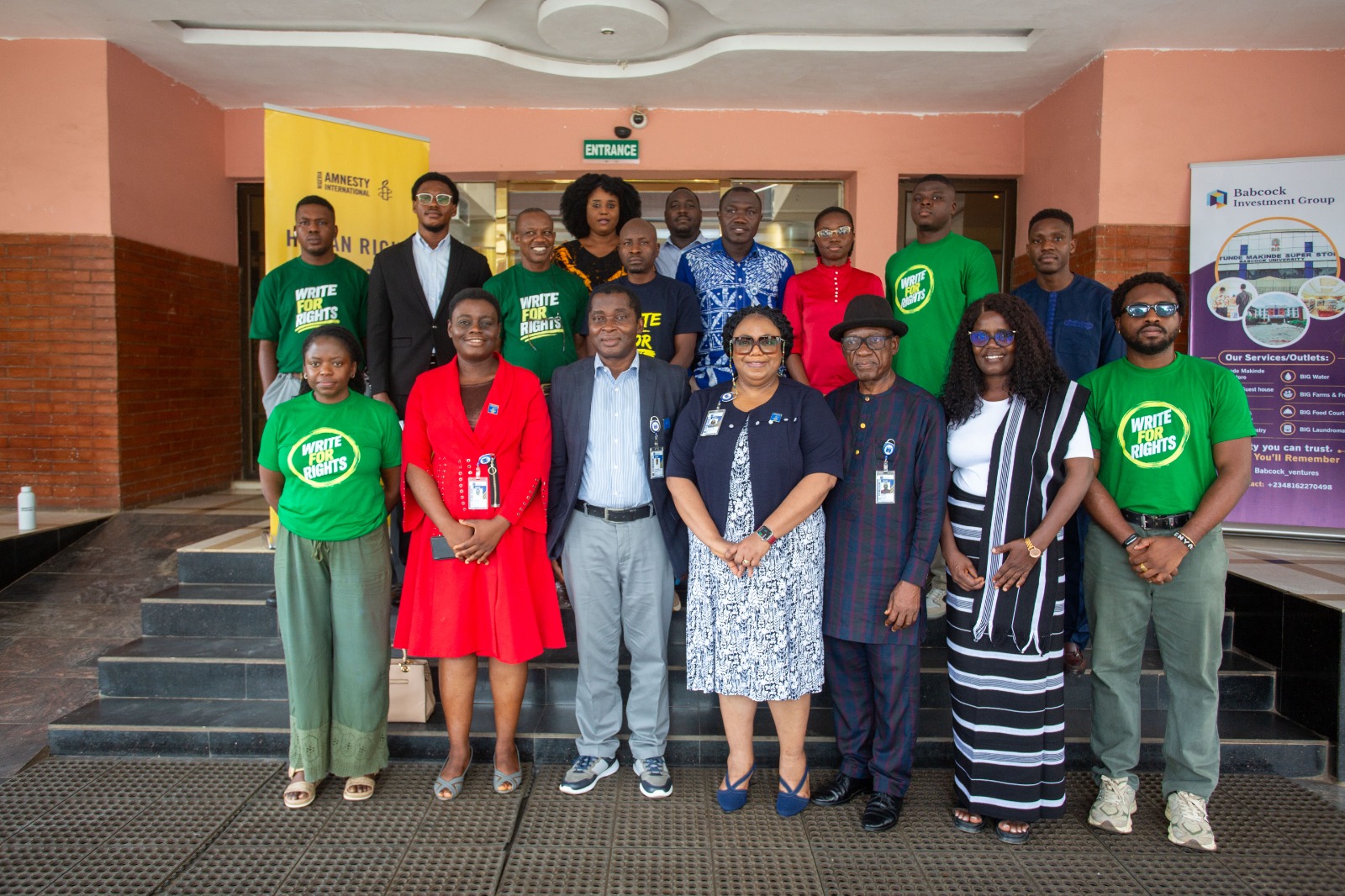
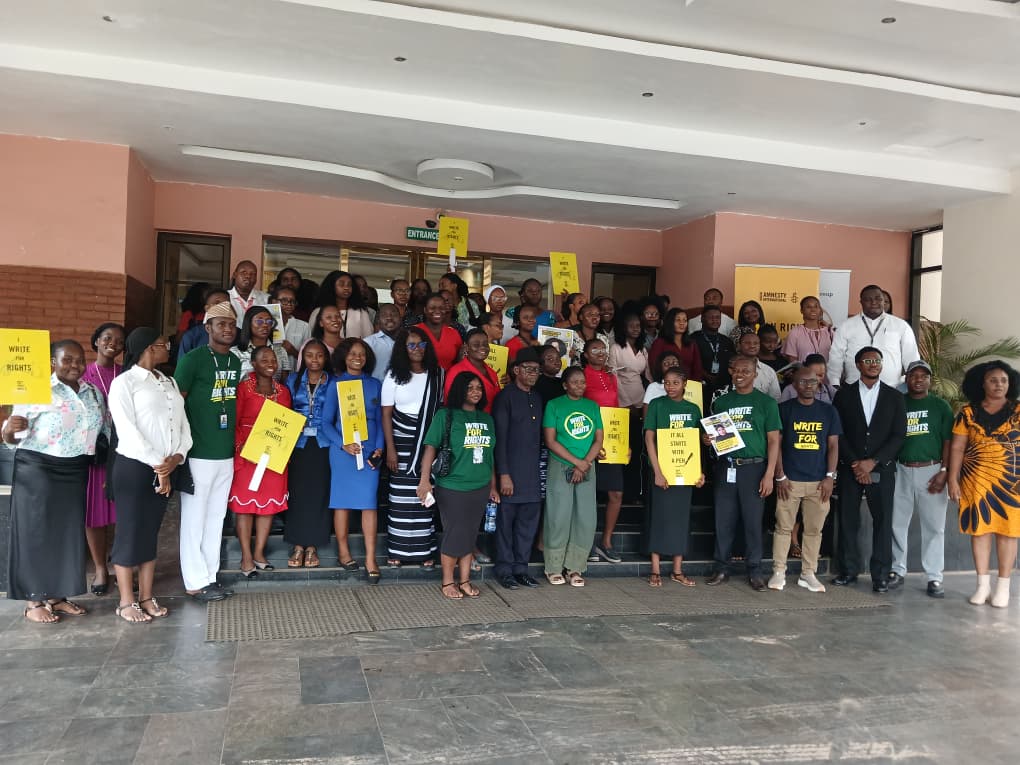
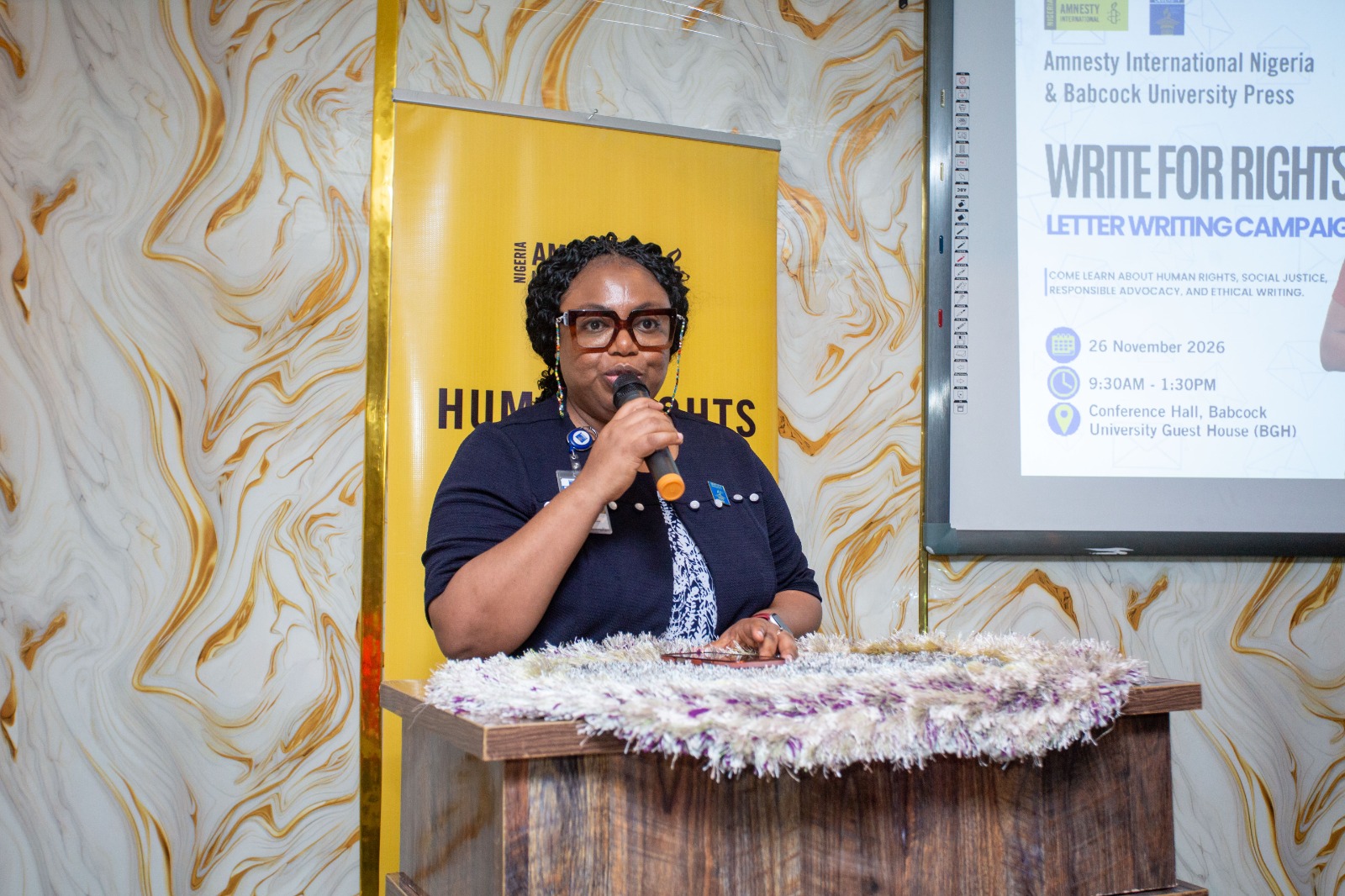
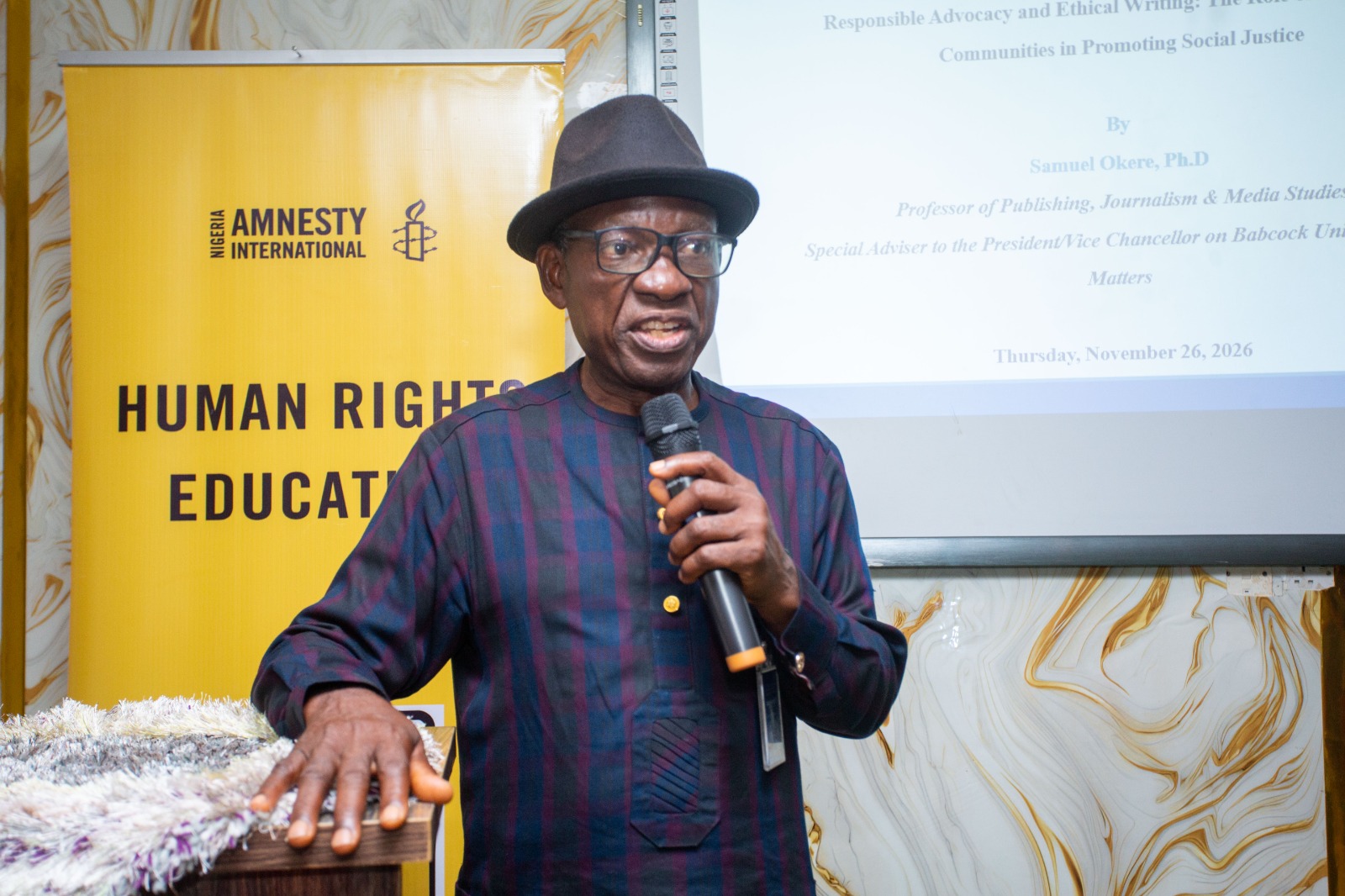
It is against this backdrop that Babcock University hosted Amnesty International Nigeria on November 26, 2026, for the launch of its 2026 Write for Rights (W4R) campaign, challenging students to use their voices and the power of writing to stand against injustice.
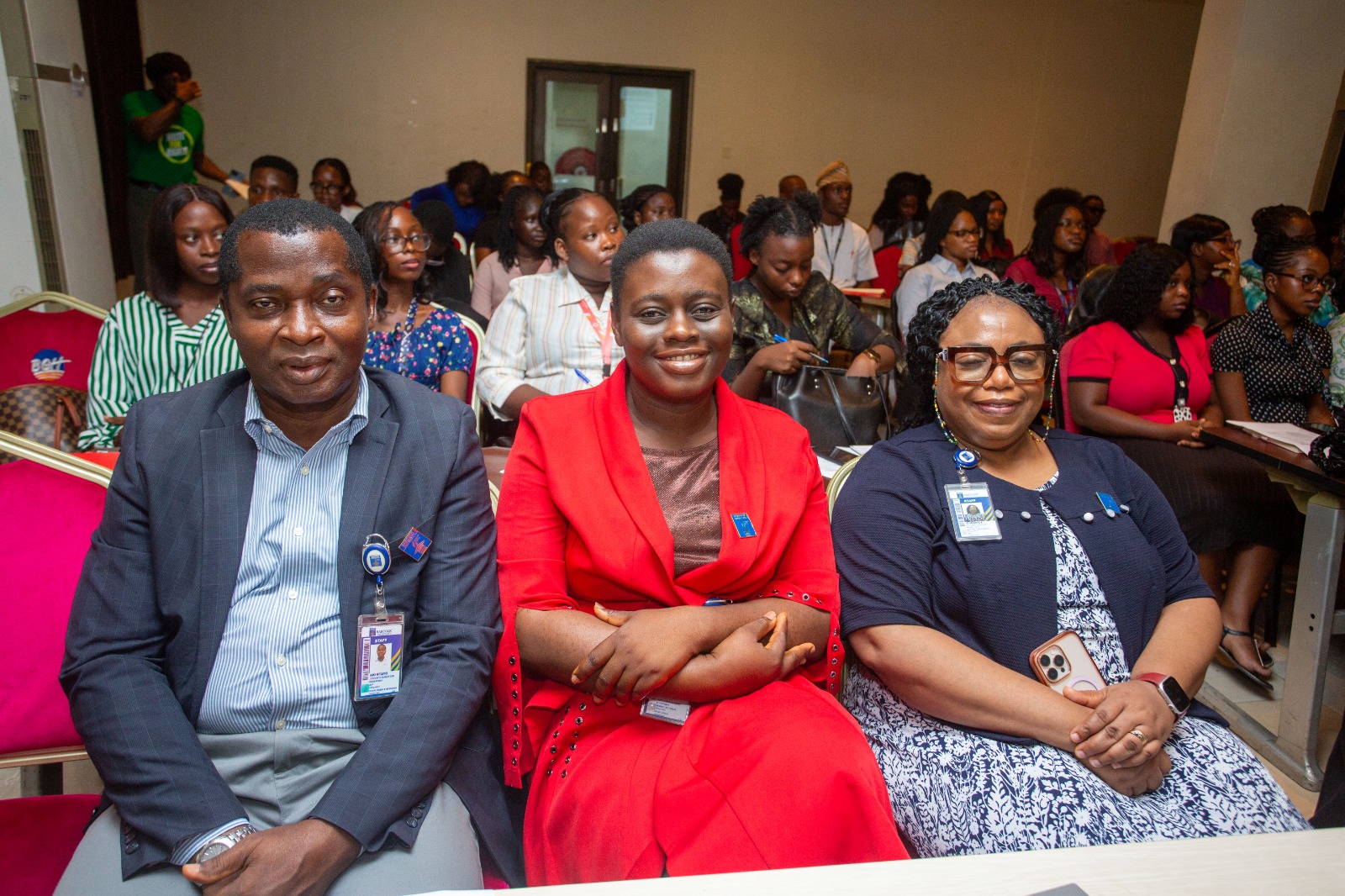
The programme, organised by Amnesty International Nigeria in partnership with Babcock University Press (BU Press), brought together university administrators, academics, media representatives and students for a sensitisation and training workshop on human rights, responsible advocacy and civic participation.
In the opening address delivered on behalf of the President/Vice-Chancellor, Prof. Foluso Ojewole, the University's representative and Associate Vice President, Research, Innovation and International Collaboration (RIIC) emphasized the importance of speaking against human rights violations, warning that injustice left unchallenged can encourage further abuses. She further urged the participants not to treat human rights violations as distant concerns but as societal challenges that demand collective responsibility. The address emphasised that injustice, when ignored or left unchallenged, can encourage further violations and weaken respect for human dignity, freedom and the rule of law.
The underlying message was that silence should not become an endorsement of injustice and that everyone has a responsibility to contribute to a society where the rights and dignity of others are respected.
When words become instruments of justice
At the heart of Amnesty International's Write for Rights campaign is a simple but powerful idea: a letter can become a voice for someone who is unable to speak freely, a source of encouragement for someone facing persecution and a demand for accountability from those in positions of authority. This was emphasized by Dooshima Tsee, the Media Manager of Amnesty International Nigeria.
One of Amnesty International's largest annual global human rights campaigns, Write for Rights mobilises individuals and communities to write letters, sign petitions and appeal to governments and decision-makers on behalf of people whose rights have been violated.
During the workshop, participants learnt about two important forms of advocacy letters. Support letters offer encouragement and solidarity to individuals facing imprisonment, discrimination or persecution, while pressure letters appeal to governments and decision-makers to review cases and take corrective action.
The facilitators explained that coordinated public action can influence decision-makers, particularly when thousands of people across different countries unite to demand justice.
The campaign, which marks its 25th anniversary in 2026, demonstrates how individual actions, when multiplied across communities and countries, can become a powerful instrument for human rights advocacy.
Who gets to speak? Examining Nigeria's human rights realities
The engagement also featured a training session facilitated by Amnesty International representative, Samson Abolarin, under the theme, Who Gets to Speak?, participants examined the Universal Declaration of Human Rights (UDHR), exploring its 30 articles against the realities of Nigeria's civic and institutional environment.
Discussions covered freedom of expression, privacy, peaceful assembly, social security, access to justice and the responsibility of governments to protect fundamental freedoms.
One observation by a doctoral student captured the tension between constitutional freedoms and their practical exercise in Nigeria: "People are free to express themselves in Nigeria, but not free from the consequences."
The discussion explored the gap between the recognition of fundamental rights in law and their actual enjoyment, particularly where individuals encounter intimidation, restrictions or violence for exercising their freedoms.
Participants were also reminded that human rights are interconnected and that protecting one person's freedoms must not come at the expense of another's.
From empathy to action: The cases of Marwa and Rokiatou
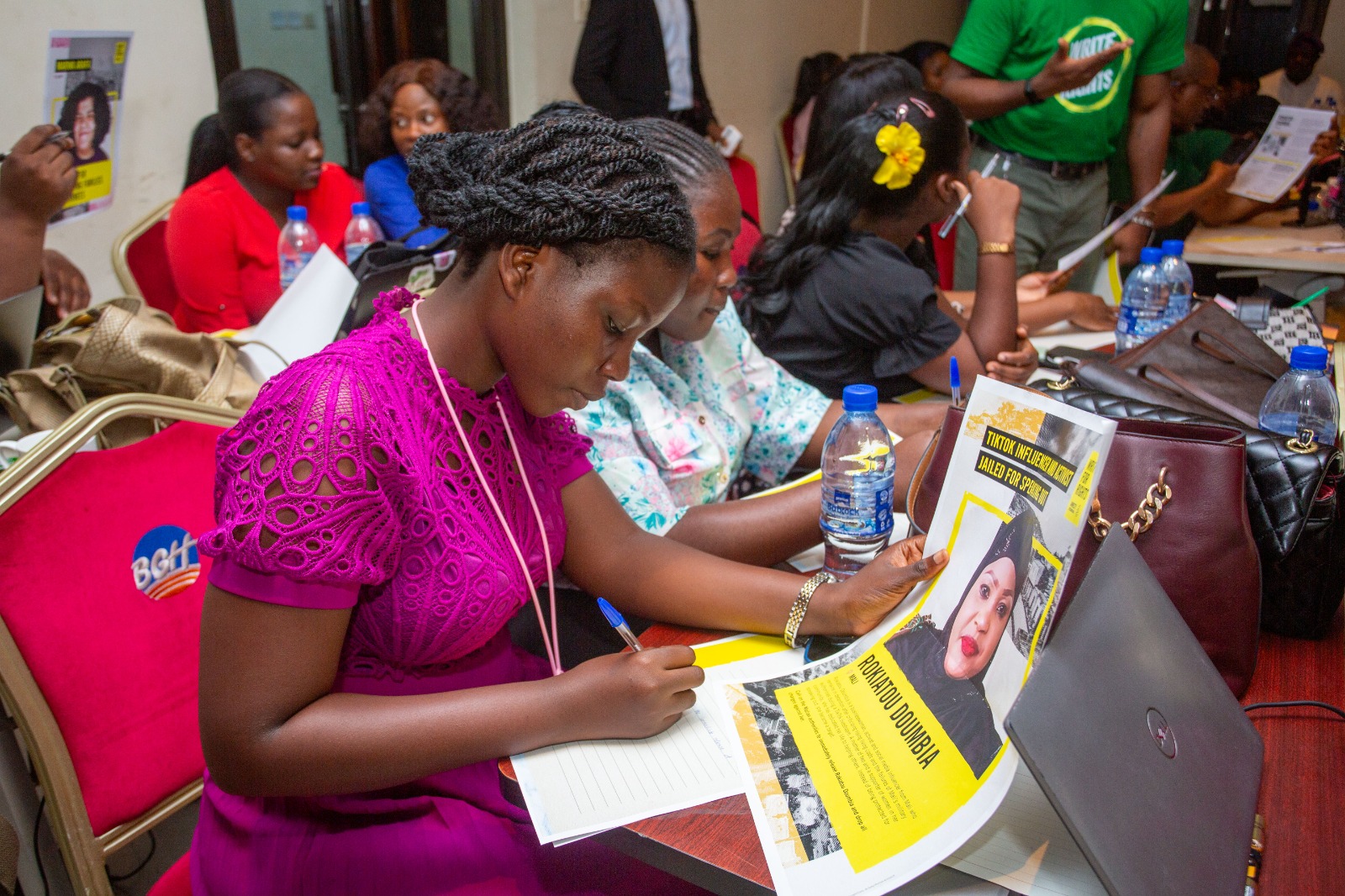
Moving beyond classroom discussions, the workshop introduced students to two human rights cases featured in the campaign.
The first concerned Marwa Arafat, reportedly detained in Egypt since April 2020 on terrorism-related charges, with concerns raised about her deteriorating health. The second involved Rokiatou Doumbia, who was reported to have been imprisoned in Mali in connection with her human rights advocacy.
Students were encouraged to write appeals to the President of Egypt concerning Marwa's case and to Mali's Minister of Justice regarding Rokiatou's situation.
The exercise gave participants an opportunity to experience advocacy beyond theory by using written communication to draw attention to individual cases and call on relevant authorities to uphold human rights.
The facilitator also referenced previous advocacy efforts, including the campaign for Moses Agatuga, who spent 10 years in detention over an alleged stolen-phone incident, to demonstrate the importance of sustained public pressure in seeking justice.
Participants learnt that Amnesty International's advocacy is supported by a global network of members and volunteers and funded through public donations, rather than contributions from governments or other actors responsible for human rights abuses.
Beyond the classroom: Education with a voice and a purpose
For Babcock University, the engagement was an opportunity to connect academic learning with the realities of the wider society. Through its partnership with Amnesty International Nigeria and BU Press, the University brought a global human rights conversation into the classroom, encouraging students to examine societal challenges and consider how their knowledge and skills could contribute to meaningful change.
The initiative reflects Babcock's broader ambition to develop a globally relevant, research-focused and competent community, grounded in its Adventist heritage and commitment to service. By exposing students to international advocacy practices while examining local human rights realities, the programme encouraged critical inquiry, professional competence and a sense of responsibility beyond personal success.
It also demonstrated how communication, collaboration and practical problem-solving can be applied to issues affecting individuals and communities. These outcomes reinforce the University's strategic GRACE aspiration: to build a community whose academic knowledge, values and abilities translate into purposeful contributions to society.
The programme further advances the United Nations Sustainable Development Goals, particularly SDG 16 (Peace, Justice and Strong Institutions) and SDG 4 (Quality Education), through its emphasis on justice, human rights awareness and learning beyond the classroom.
As the workshop concluded, students were reminded that human rights advocacy is not simply about defending personal freedoms but also about standing with people whose circumstances make it difficult for them to be heard.
The facilitator urged participants to write with empathy, imagine the person whose rights are threatened as a member of their own family and recognise the potential of their voices to influence lives.
The message was clear: one does not have to hold public office, lead an organisation or occupy a position of influence to stand against injustice. Sometimes, change begins with a decision to speak, a willingness to listen and a letter written on behalf of someone whose voice needs to be heard.
For Babcock students, the challenge now is to take that lesson beyond the workshop. Because education is not measured only by what people know, but also by how they use what they know to make a difference.
In launching the Write for Rights campaign, Babcock University did more than host a workshop; it amplified a collective voice. Because in the face of injustice, neutrality is not an option, and silence is a luxury the world cannot afford.
One letter. One voice. One step towards justice.
#BabcockUniversity #BabcockUniversityPress #WriteForRights2026 #AmnestyInternational #HumanRights #GRACE #SDG16 #SDG4